 EN
EN Türkçe
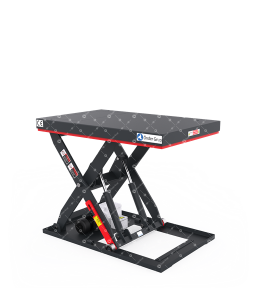
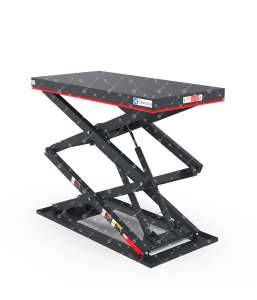
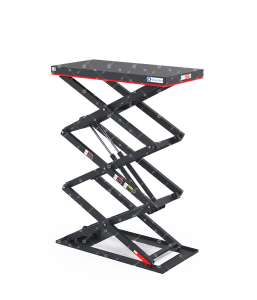
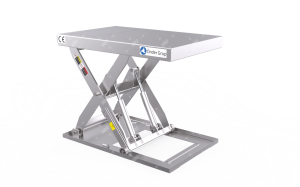
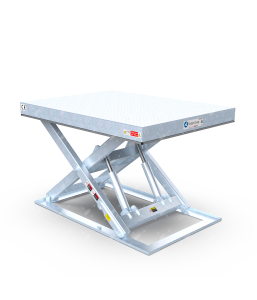
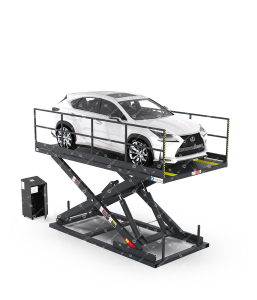
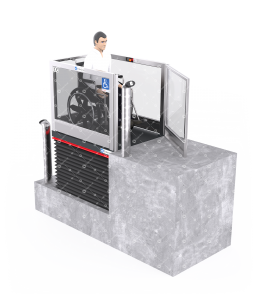
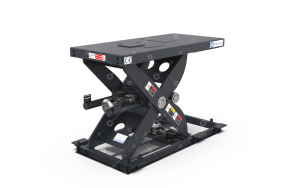

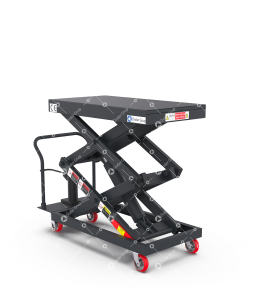
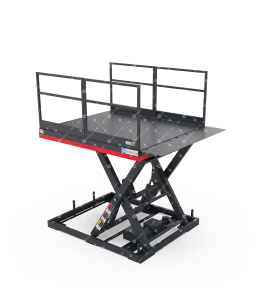
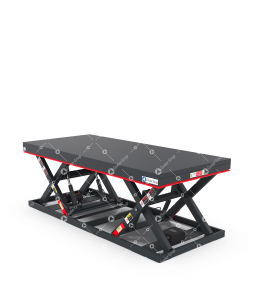
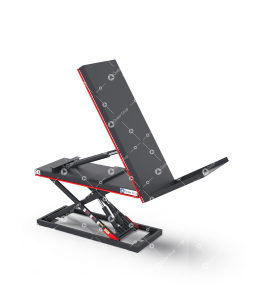
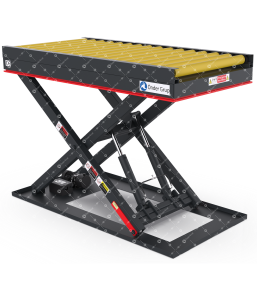
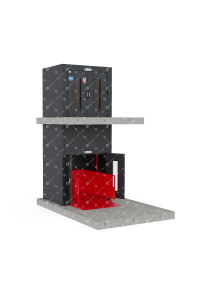

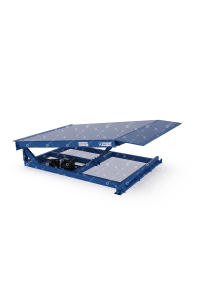
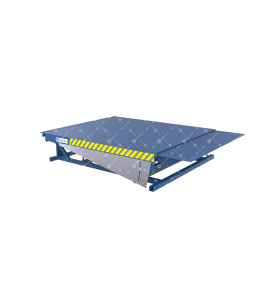
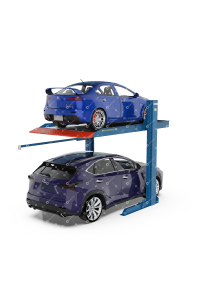















The Scissor Car Platform is available in two different solution options: a vehicle-only version where only the car is transferred on the platform, and a driver-on-board version where the driver remains inside the vehicle and controls the platform (Driver on Board).
Lift Tables
Car Lift Table
A Scissor Car Platform is a hydraulic platform system designed to transfer vehicles safely and in a controlled manner between floors in parking facilities, car showrooms, and industrial sites. With its high load capacity, project-specific customizable platform dimensions, and advanced safety equipment, it delivers a space-saving, reliable, and long-lasting vertical vehicle transfer solution.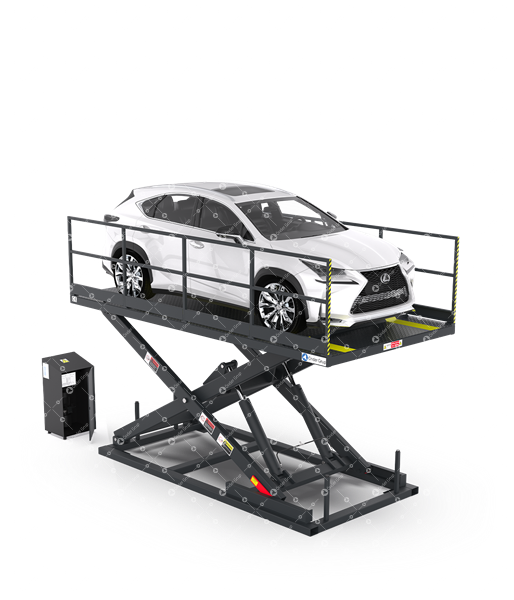


Car Lift with Covering Roof – With or Without Driver on Board
Review the ModelDo you need custom designed lifting solutions?
Contact a Lift Expert Today.
CASE STUDIES

Driver On Board Car Platform 3000 kg
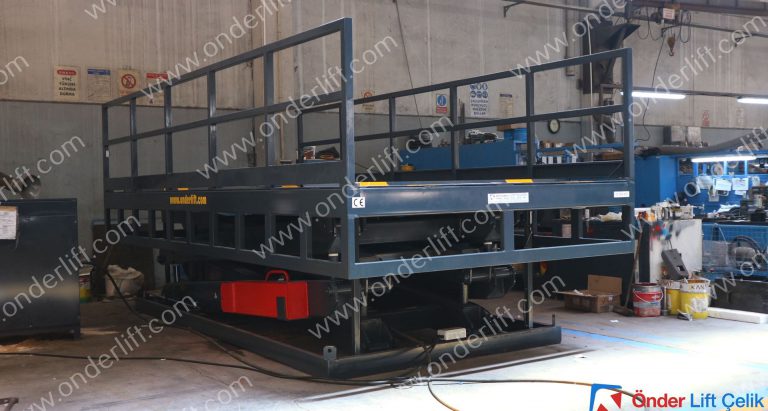
Scissor Car Lift Table
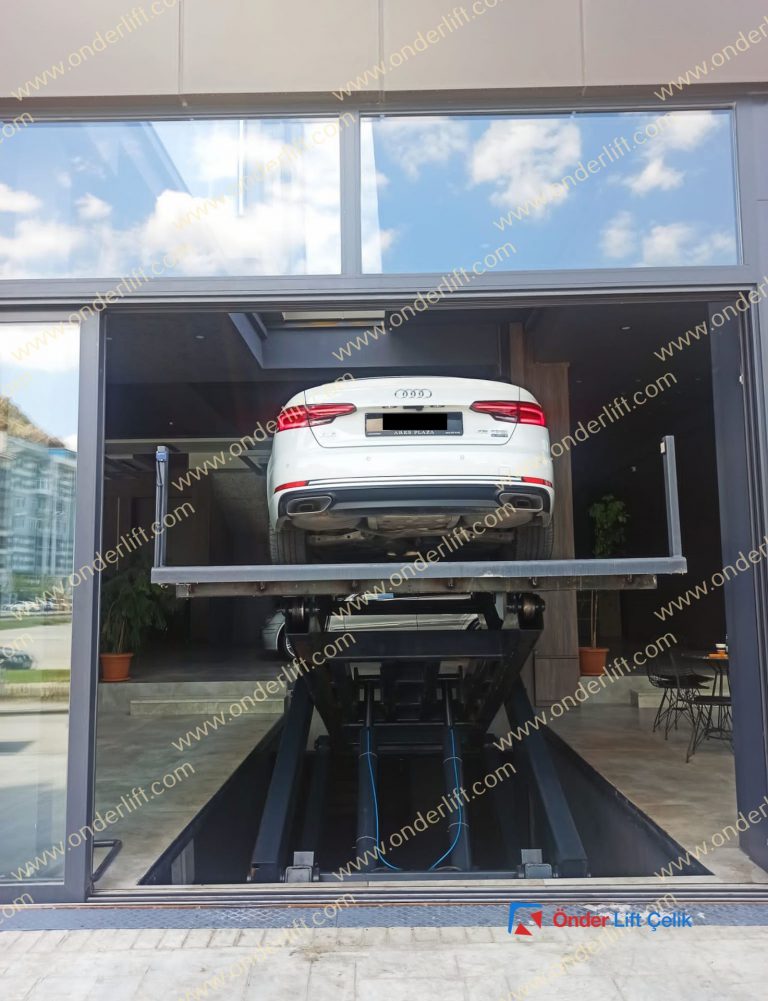
Scissor Car Lift Table
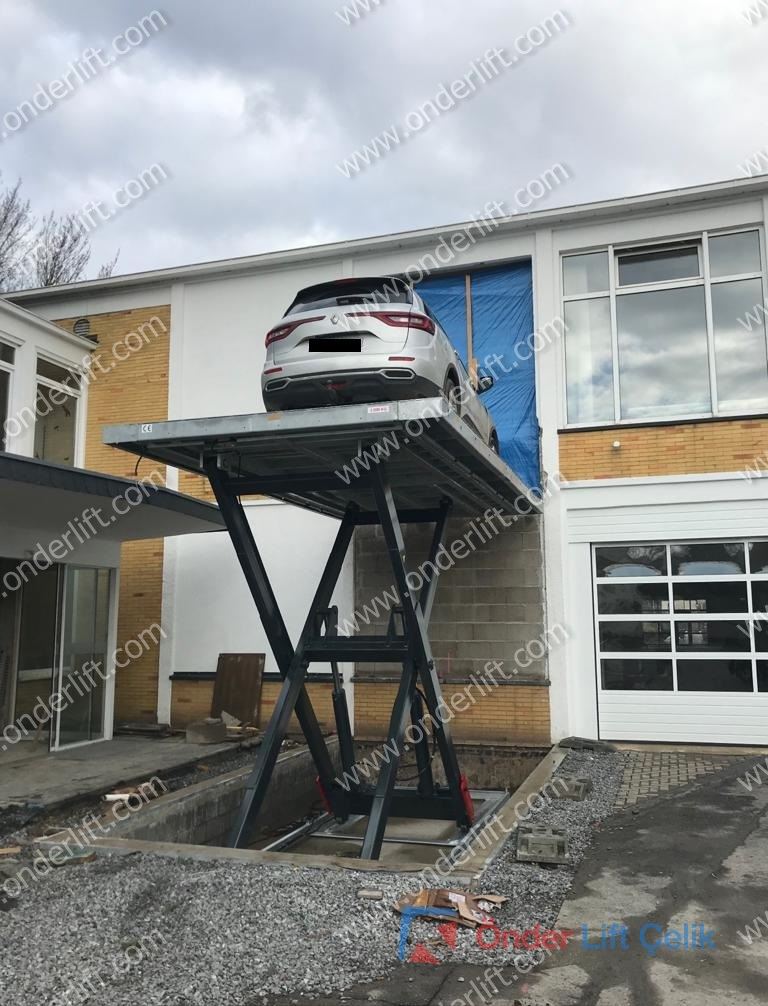
Scissor Car Lift Table

Turn Table Car Lift

Hot-dipped galvanized Lift Table

Heavy-Duty Single Scissor Lift Table
1) What is a Car Lift Table?
A Car Lift Table is a hydraulic platform system designed to transfer vehicles safely and in a controlled manner between floors in parking facilities, car showrooms, and industrial sites. With high load capacity, project-specific customizable dimensions, and a safety-focused design approach, it provides a space-saving vertical vehicle transfer solution without the need for ramps.
2) How many product types are available under the Car Lift Table range?
There are three product types in this main product range:
- Car Lift Table – Only Car
- Car Lift Table – Driver on Board
- Car Lift Table – Roof (with covering roof, with or without driver on board)
3) What does “Car Lift Table – Only Car” mean?
In the Only Car version, the vehicle is positioned on the platform and the driver exits the vehicle. The transfer is then carried out according to the project operating scenario (typically via external control / automated logic). This type is often preferred in controlled parking operations where user guidance is clearly defined.
4) What does “Car Lift Table – Driver on Board” mean?
In the Driver On Board version, the driver remains inside the vehicle and controls the platform using the on-platform control unit. Because the driver is on the platform during operation, this version requires additional safety layers and project-specific engineering.
5) When is “Car Lift Table – Roof” preferred?
The Roof version is selected when a covering roof is required for architectural or operational reasons, or for protection against outdoor conditions (rain, snow, sun). It is advantageous for outdoor parking entrances, facilities with outdoor vehicle circulation, and sites where weather conditions may affect equipment and daily operation.
This version can be configured with or without Driver on Board, depending on the project scenario.
6) What are the main differences between these three product types?
- Operating scenario: Only Car vs. Driver on Board
- Safety architecture: Driver on Board requires additional safety scenarios and validations
- Structural protection & architectural integration: Roof version adds outdoor protection and improved visual integration
- Project integration: doors/barriers, interlocks, traffic lights, and access control are configured by product type and site layout
7) Which safety features stand out?
Safety is ensured through multiple layers configured according to the operating scenario and site conditions. Depending on the project, key solutions include doors/barriers, interlock logic, signaling (warning lights / audible alarms), overload protection, hydraulic safety components (e.g., hose burst valve, controlled lowering), and access control options to prevent unauthorized use.
8) What additional safety needs apply to Driver On Board?
Because the driver is on the platform during operation, the risk assessment changes. Therefore, Driver on Board solutions may require additional measures such as enhanced access control, safe operating scenarios, extra sensing/monitoring, and defined operating procedures—configured project by project.
9) How are capacity and platform dimensions selected?
Selection is based on maximum vehicle weight, vehicle dimensions (length/width), wheel track/wheelbase, entry/exit directions, and usage intensity. Project-specific sizing ensures safe operation and comfortable maneuvering.
10) How is stroke (travel distance) determined?
Stroke is determined by the floor-to-floor height difference. The number of stops, leveling tolerances, and architectural clearances also influence the final travel selection.
11) Is a pit required? What if a pit is not available?
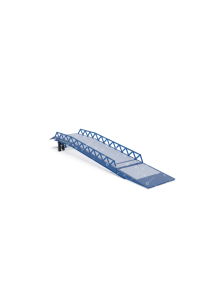
Yes, a pit is generally required to achieve floor-flush entry/exit and convenient operation. If a pit cannot be built on-site, alternative ramp solutions can be implemented.
12) Does the “Car Lift Table – Roof” version provide advantages in maintenance and operation?
Yes. The covering roof can improve protection against outdoor exposure, support a cleaner site appearance, and enhance operational comfort. When the platform is in the lowest position, the top surface of the roof is typically designed to match the surrounding landscaping level, creating architectural continuity when viewed from outside.
Depending on the project, the roof can also be engineered so that:
- Vehicles can drive over the roof, and/or
- A second vehicle can be positioned/handled on top of the roof structure.
These details are defined during the project design phase and shaped by the architectural and operational scenario.
13) What information is needed for a quotation?
For a fast quotation, please share:
- Product type: Only Car / Driver on Board / Roof (with or without driver on board)
- Maximum vehicle weight and vehicle type
- Vehicle dimensions (approx. length/width, wheel track)
- Floor-to-floor height difference (stroke) and number of stops
- Pit availability (yes/no) and ramp requirement
- Doors/barriers, interlocks, access control, signaling expectations
- Usage intensity (daily cycles / duty cycle)