 EN
EN Türkçe
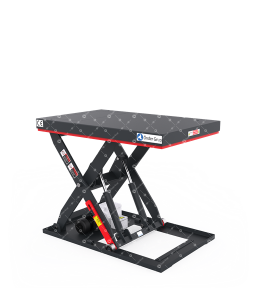
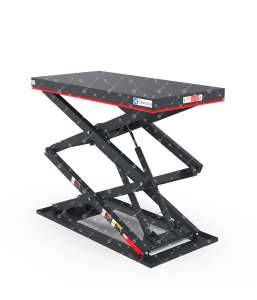
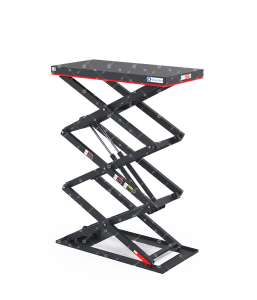
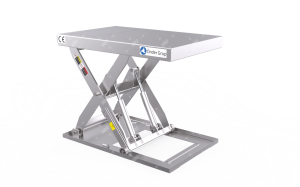
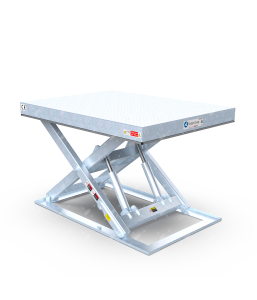
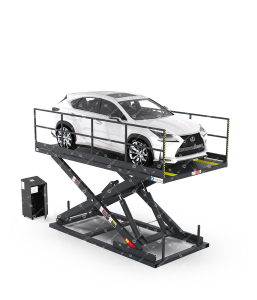
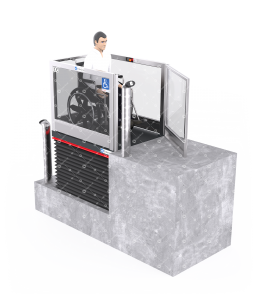
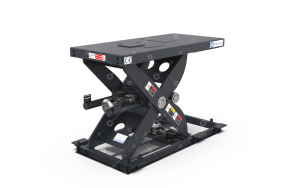

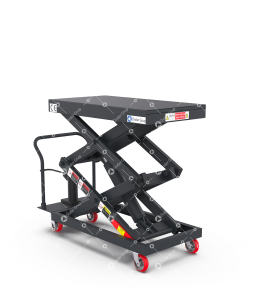
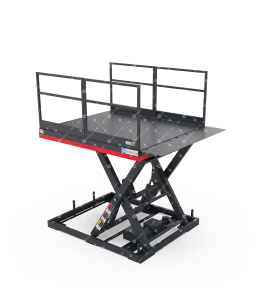
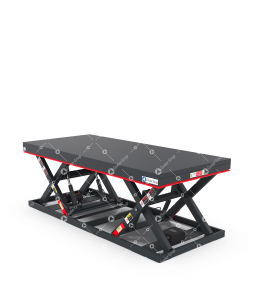
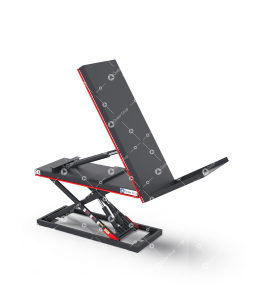
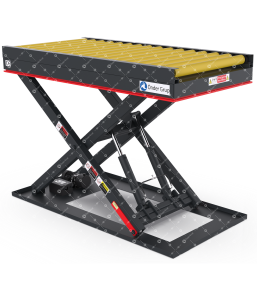


















FAQ – Ball Screw Lift Table
1) What is a Ball Screw Lift Table?
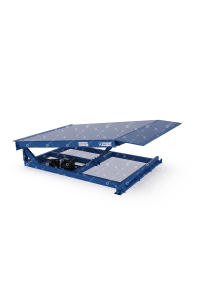
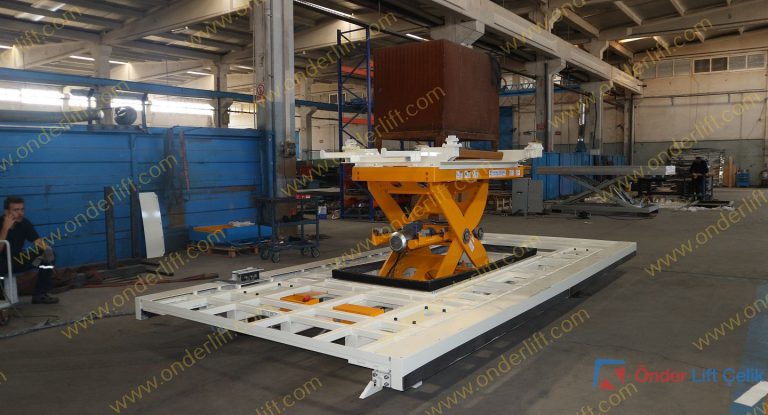
A Ball Screw Lift Table is a fully electric scissor lifting system driven by a ball screw mechanism. It is used to lift/lower loads with high precision and repeatability, and to position loads safely within industrial processes.
2) Where is this product typically used?
These systems are generally used inside factories and production environments rather than for inter-floor goods transfer. They are ideal for applications with high daily cycle counts, such as production lines, assembly stations, process feed points, packaging areas, conveyor integration, and automation-focused load positioning.
3) What is the key advantage compared to hydraulic scissor lift tables?
One of the key advantages is suitability for a higher duty cycle compared to typical hydraulic solutions. This makes it a strong choice for continuous, repetitive up/down movements throughout the day.
4) What does “precision positioning” provide?
Ball screw drive technology supports controlled movement and repeatable height positioning. This is valuable in automation lines, robotic transfer/feeding points, and processes requiring consistent leveling and accurate load placement.
5) What is the lifting capacity?
Depending on the project and configuration, the system can be engineered for capacities up to 20,000 kg. Capacity selection considers load distribution on the platform, cycle frequency, and the operating scenario.
6) Can the lifting/lowering speed be adjusted?
Yes. Speed and motion behavior (such as smooth acceleration/deceleration) can be optimized based on application needs. Projects can be configured for slower, fine-controlled motion for precision processes or faster operation where throughput is the priority.
7) Can it be integrated into automation systems?
Yes. Ball Screw Lift Tables are suitable for PLC/automation integration. They can be incorporated into conveyors, robotic cells, production stations, and similar systems where loads must be positioned at defined heights.
8) What sensing options are available for positioning?
Depending on the application, limit switches, position feedback solutions (e.g., encoder-based), and leveling scenarios can be used to achieve consistent performance at target heights.
9) What does “clean operation” mean?
Because the system is fully electric, it can support a cleaner operating approach compared to systems that rely on hydraulic oil. This can be beneficial in environments where cleanliness and housekeeping are important.
10) How about noise level and operator comfort?
With the right configuration, electric drive solutions can support quiet operation, which is especially beneficial for shift-based manufacturing and workstations where operators work close to the equipment.
11) What are the maintenance requirements?
Ball screw systems are designed to support low maintenance with correct use and planned inspections. Maintenance intervals are defined based on duty cycle, operating environment, and project configuration.
12) Which safety features are typically considered?
Safety is engineered through mechanical strength, control logic, and appropriate guarding. Depending on the project, the following may be applied as standard and/or optional solutions:
- Emergency Stop (E-Stop) and safe control logic
- Upper/lower limit and over-travel protection
- Pinch-point protection such as bellows/skirting
- Mechanical maintenance safety stop for servicing
- Project-based anti-fall concepts (ball screw safety arrangements) and motor brake solutions
13) Can the load be held at a fixed height for a long time?
Depending on the operating scenario, the system can be engineered to support holding the load at a defined height through suitable mechanical and control concepts. Requirements are evaluated together with process waiting times and safety expectations.
14) What information is needed for a quick quotation?
For a fast quotation and correct configuration, please share:
- Maximum load (kg) and load dimensions / load distribution
- Required platform size and stroke
- Estimated daily cycles and duty cycle
- Target speed and precision expectation
- Working environment (dust/humidity/temperature, etc.)
- Integration needs (conveyor, robot, automation signals)
Safety and option expectations (guarding, signaling, access control, etc.)